
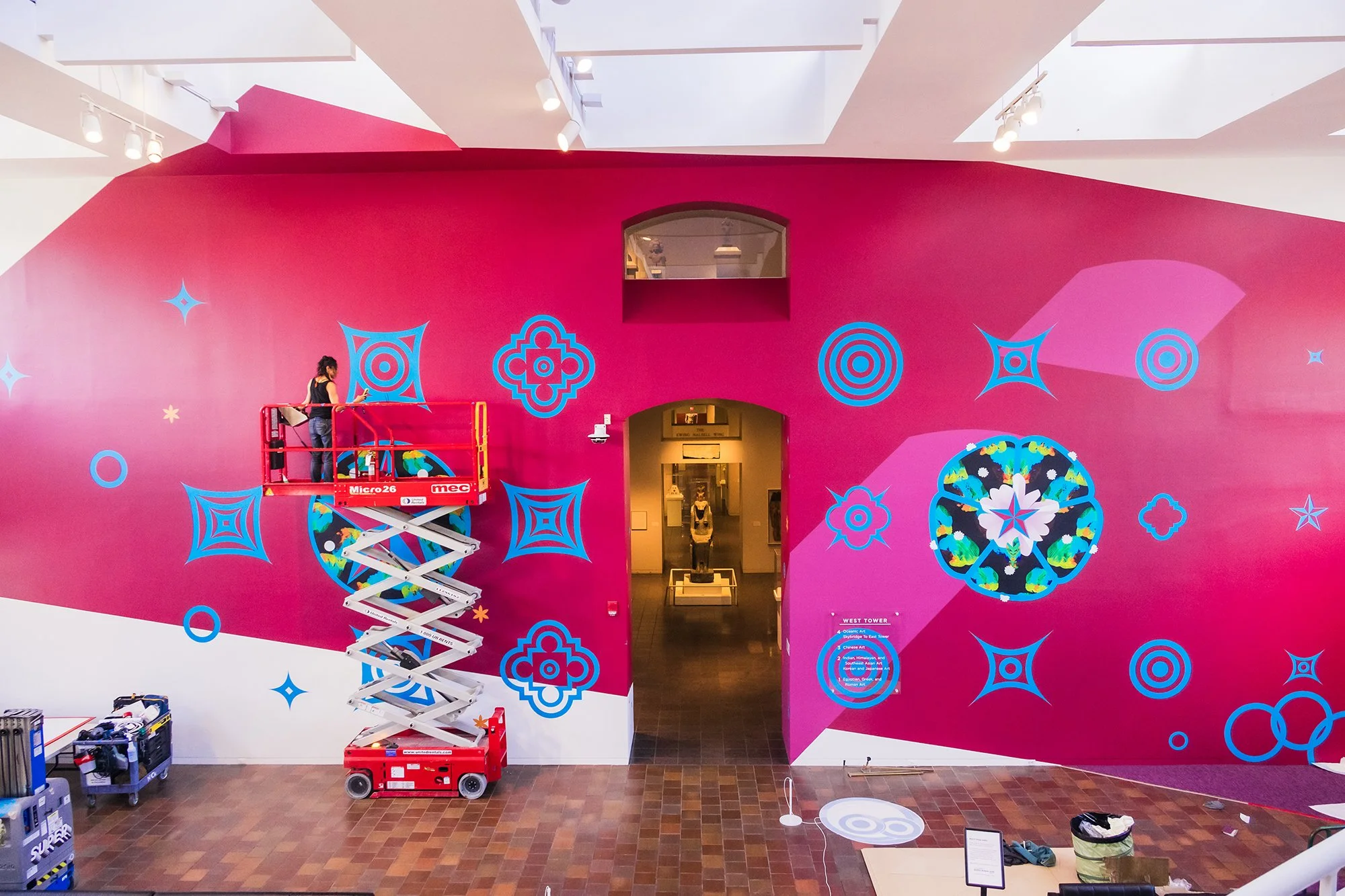
TIPSY by Marisa Morán Jahn. San Antonio Museum of Art, Nov 2025-Nov 2027. Photo by Felicia Sealey. Image courtesy of Sapar Contemporary.
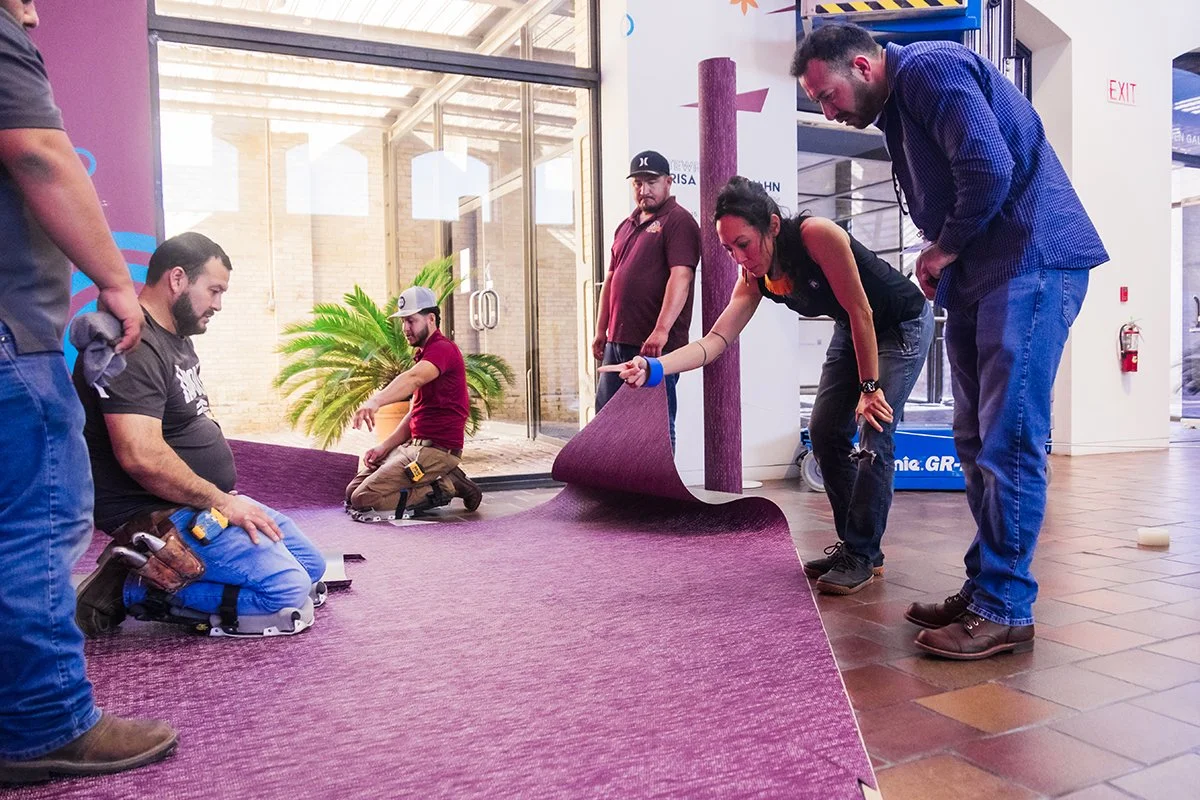
On view from November 2025-November 2027, TIPSY is a site-specific installation at the San Antonio Museum of Art by Marisa Morán Jahn that explores the role of art and “spirits” (drinks made from distilled and fermented plants) in shifting perspective and communing with the divine or with others. In the installation, wine-colored paint on the walls of the museum’s principal foyer references the building’s architectural dimensions but rather than remaining upright, it slides off at an angle, spills onto the floor, and creeps around corners. For Jahn, “TIPSY refers to things we thought we knew but turns them on their side. The artwork behaves as if it’s ecstatic, or in an altered state, inviting us to see the museum in a new way.”
“There is no art without intoxication. But I mean a mad intoxication! Let reason teeter! The highest degree of delirium!”
— Jean Dubuffet
(French wine merchant turned artist, 1901–1985)“
TIPSY draws upon SAMA’s building history as the former Lone Star Brewery along with cross-cultural traditions of imbibing spirits to connect revelry and rituals from around the world to regional history. Jahn, who is based in New York City, was born in Texas to an Ecuadorian mother and Chinese father. Her artwork frequently remixes cultural icons to destabilize fixed ideas about origin and provenance. She explains, “In the way that both art and libations lower inhibitions and forge new connections, TIPSY brings out fascinating histories that shift how we understand ourselves in the world.”
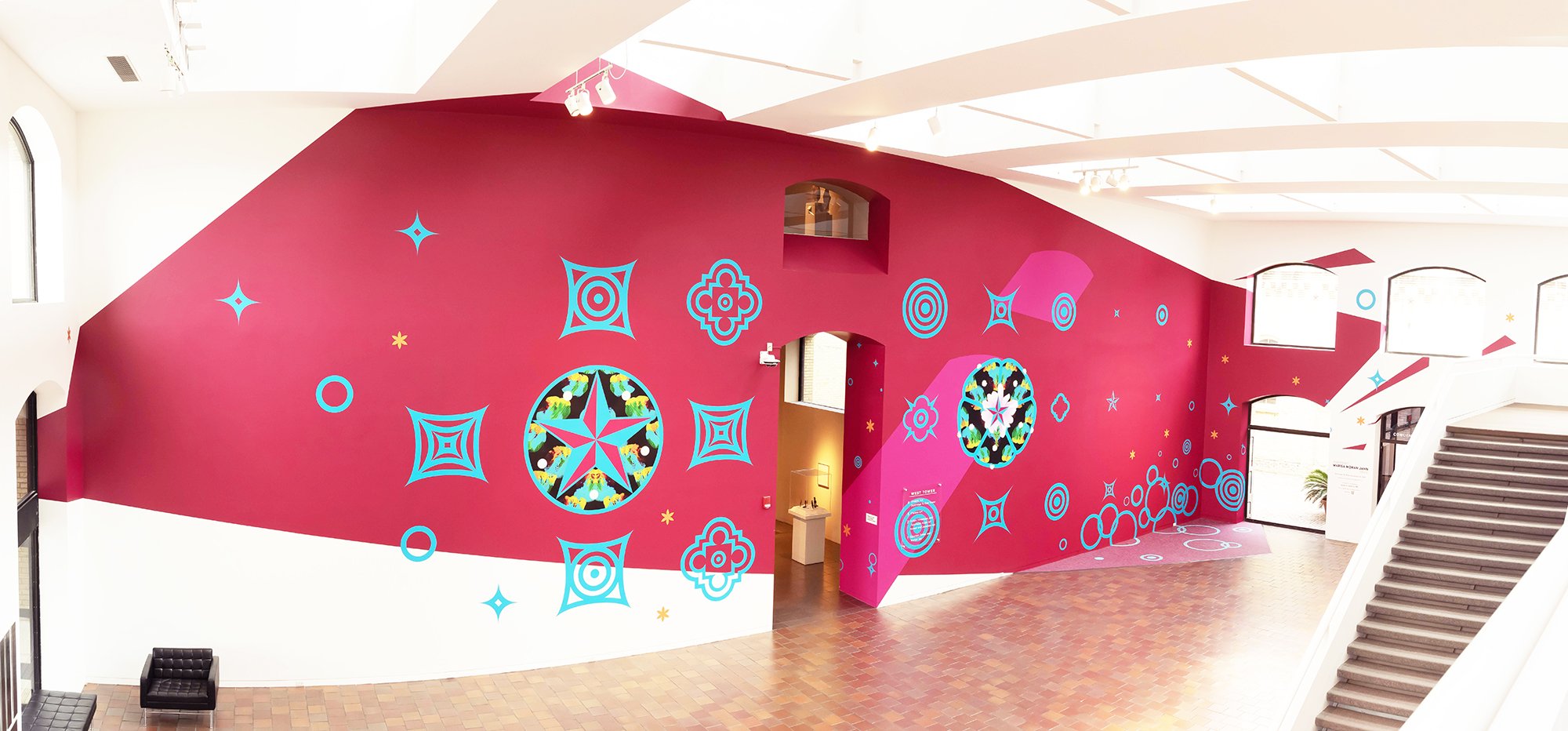
TIPSY by Marisa Morán Jahn. San Antonio Museum of Art, Nov 2025-Nov 2027. Photo by Anselm Seale. Image courtesy of Sapar Contemporary.
Ecstatic: a heightened, joyful, or exuberant state of being. From the Greek term ek (“out”, “apart from,” or “away from”) + stasis (“a stand” or “a state of being”).
Across the teetering magenta plane shifting motifs evoke glittering stars in the night sky, the historic patterned façade of San Antonio’s Mission San José, the City’s quatrefoil insignia, and archetypal symbols across time. Floating turquoise bubbles suggest the passage of water across cultures, cosmologies, and political boundaries. Recognized for its fifteen-mile River Walk (or Paseo del Río) and nicknamed River City, San Antonio is defined by the presence of the San Antonio River—known by Indigenous Coahuiltecan communities as Yanaguana (Spirit Waters). The five Spanish colonial missions were established along its banks during the eighteenth century and are now designated UNESCO World Heritage sites. The artesian Edwards Aquifer, bolstered by porous karst limestone, supplies local springs and drinking water. These waters attracted settlers, including nineteenth-century German, Czech, and Austrian immigrants such as beer magnate Adolphus Busch who endeavored to transform San Antonio into a brewing hub.2 Central to the fermentation of grains, fruits, and plants, the installation’s fizzy bubbles also recall carbonated brews—from frothy Mexican pulque (made agave plant sap since precolonial times) to beer in ancient Egypt (associated with the flooding of the Nile) to today’s Lone Star Beer (marketed as "The National Beer of Texas”).
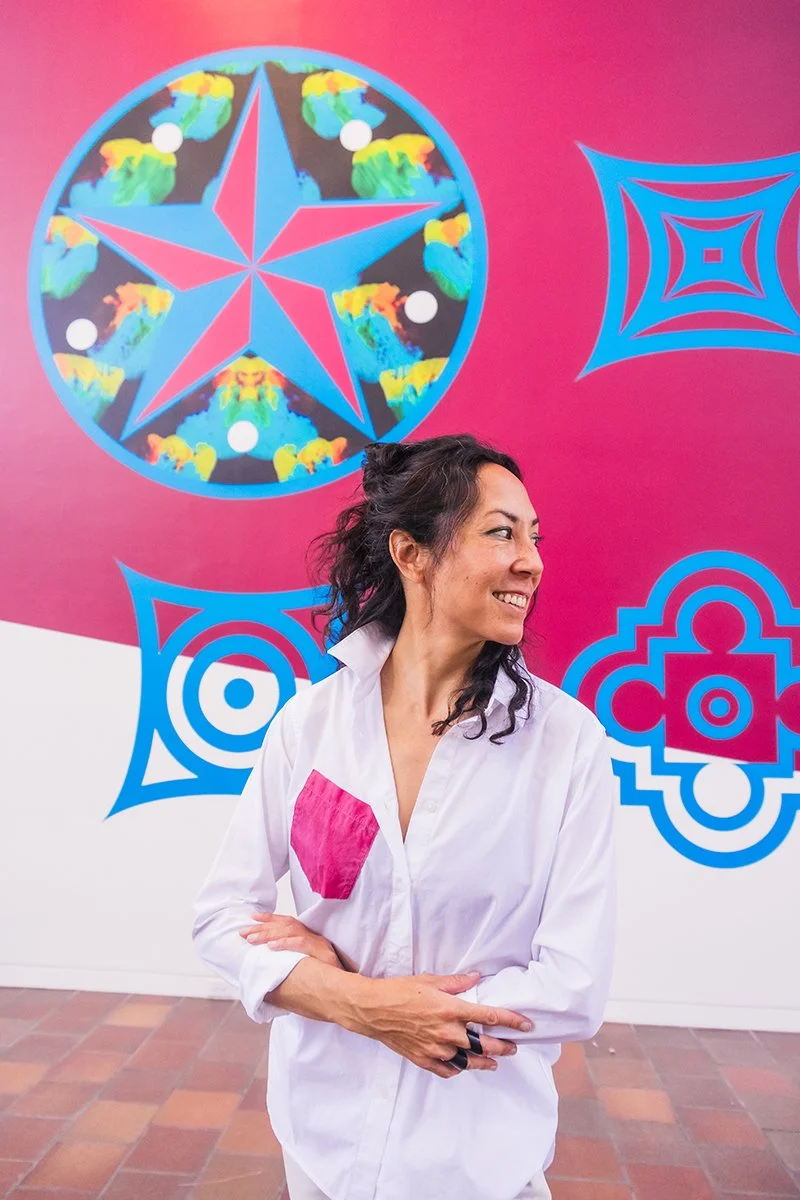
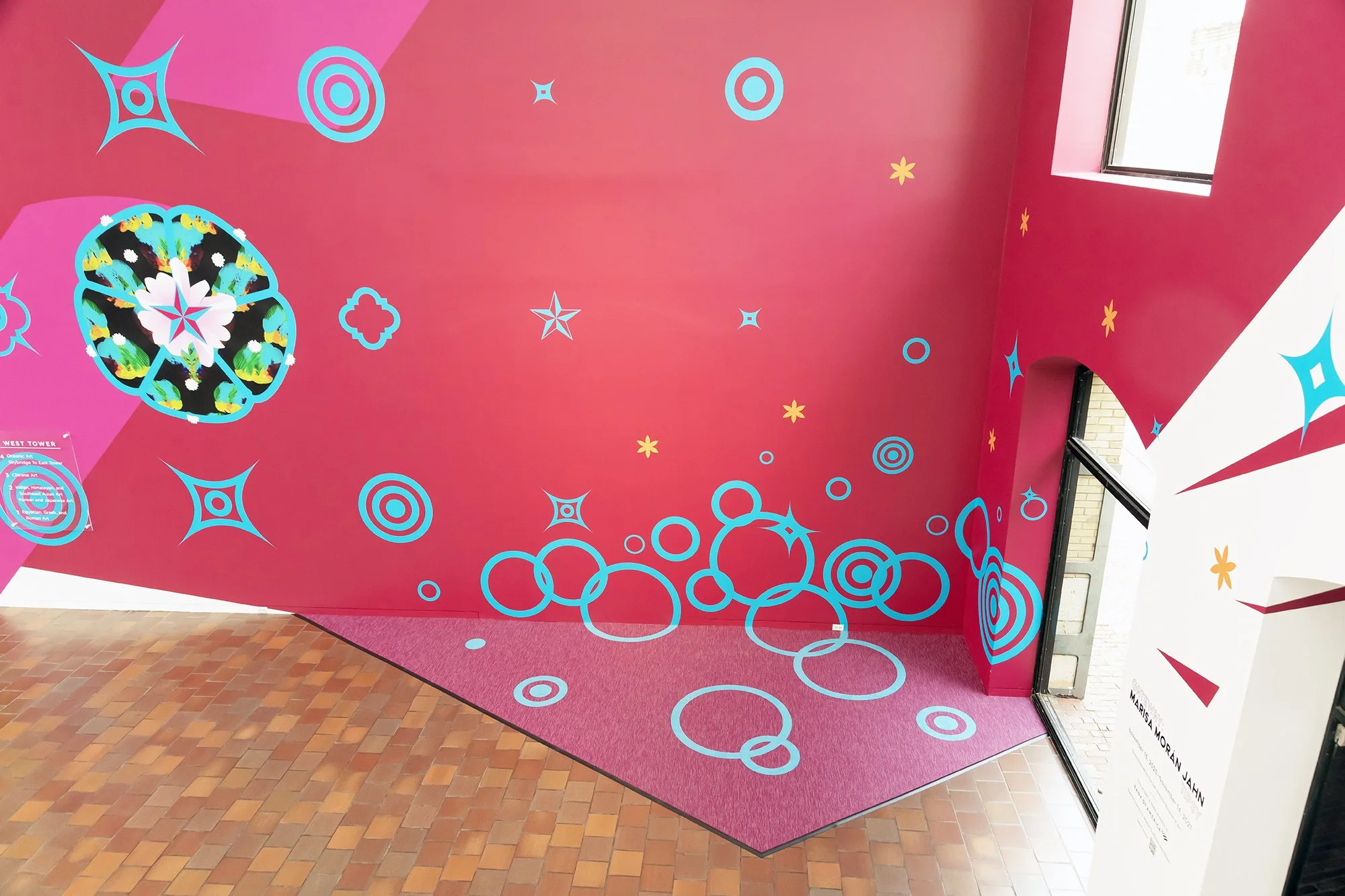
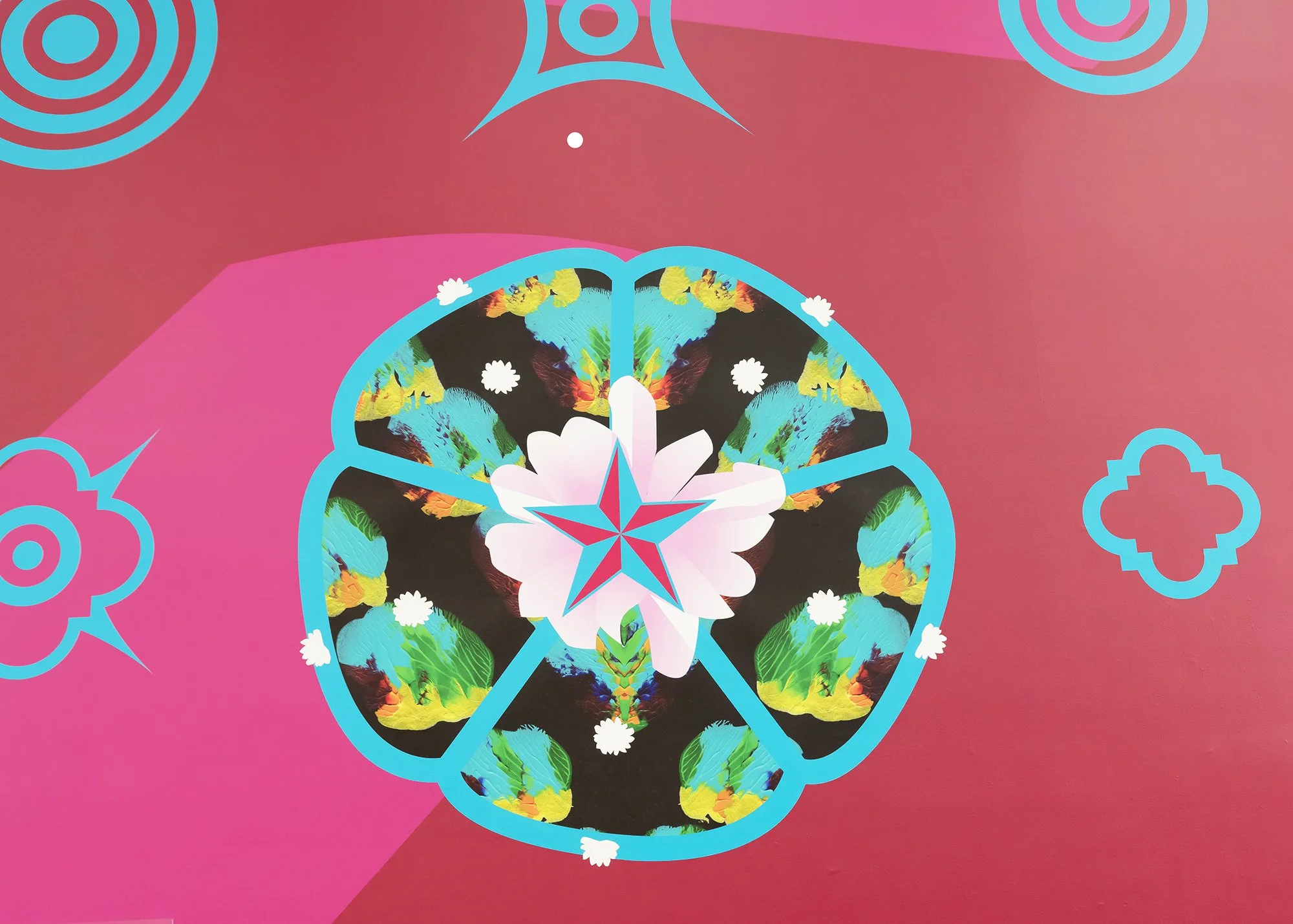
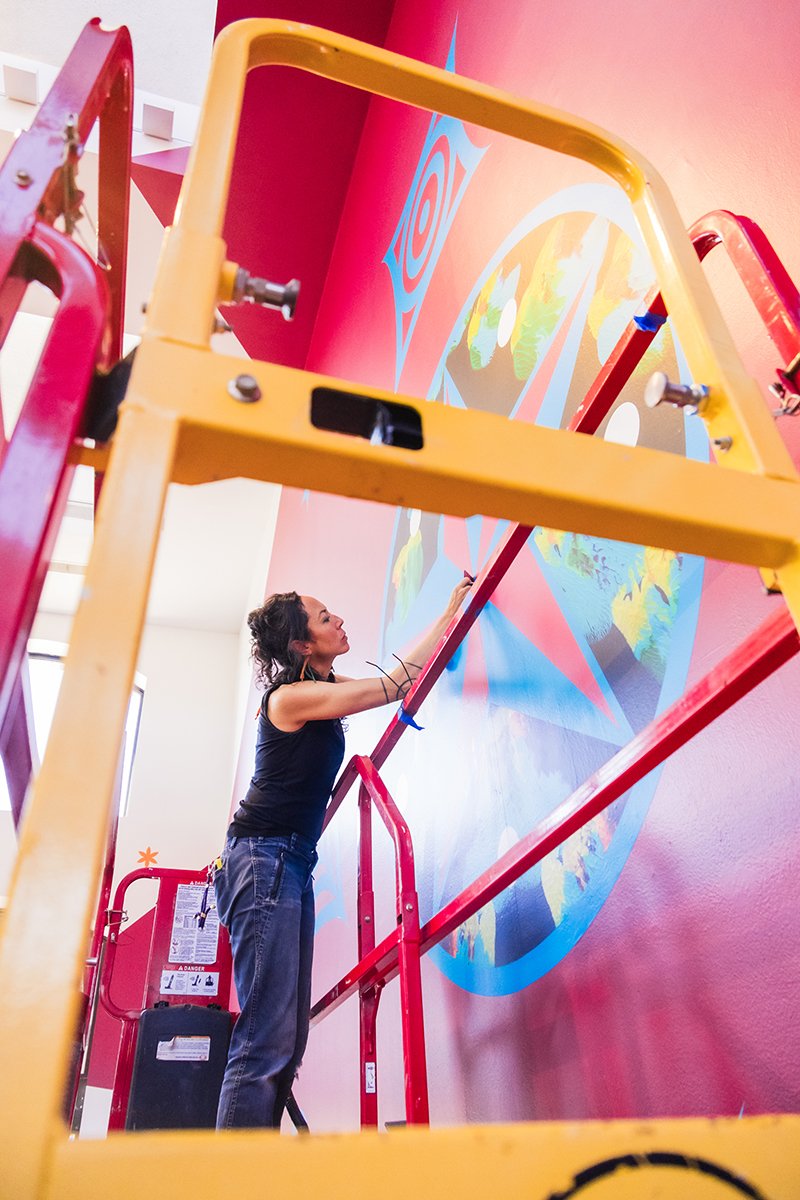
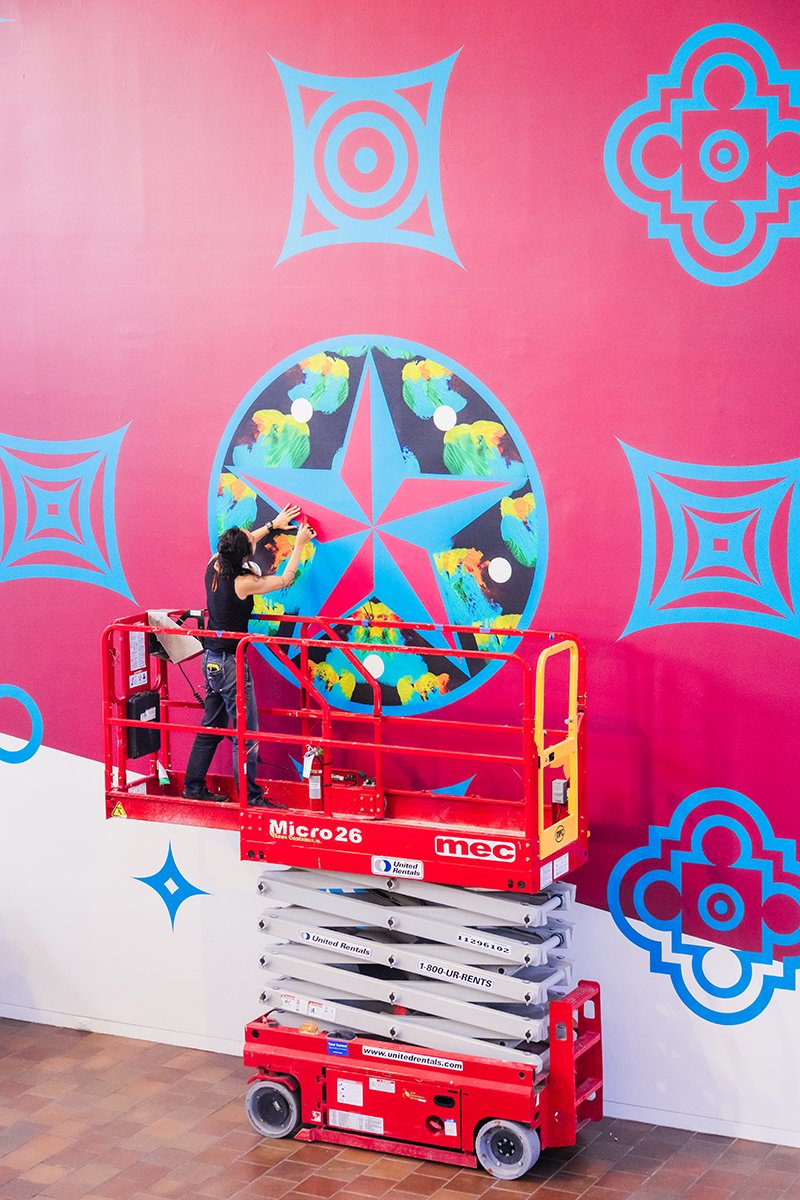
Anchoring the design are two large emblems positioned on opposite sides of the foyer’s portal. On the left, a circumscribed five-pointed star recalls the historic Lone Star Brewing Co. logo as seen on the relief in the Luby Courtyard, which originally graced the façade of the building’s west tower. On the right, the lone star morphs into a botanical form alluding to the star-shaped peyote cactus (Lophophora williamsii), a psychotropic substance used as a medicine and sacrament for over 5,000 years by Indigenous peoples spanning from South Texas to Mexico, including Coahuiltecans. While Catholic missionaries first banned peyote, the hallucinogenic cactus was later accepted in Indigenous churches in the place of wine as a holy sacrament.
The practice of intoxication is pervasive throughout history and has served a vital purpose in the development of civilization as we know it—enhancing creativity, alleviating stress, building trust, and enabling social bonding. The effects of mind-altering substances to lower inhibitions and tap into a child-like openness of the mind has proven vital to the flourishing of culture across the globe. While visions of drunken frivolity may come to mind, in fact, intoxicants often served to connect people with each other, the dead, and the divine—examples of which are present in SAMA’s collection galleries. QR codes will be placed near these artworks offer additional context through Jahn’s interviews with museum curators that explore how libations reflect cycles of harvest, birth, and power.
Jahn’s installation playfully taps into communal aspects inherent to transhistorical traditions of imbibing spirits. TIPSY reveals a shared human experience that has shaped our understanding of the world, driven cultural and spiritual impulses, and brought us together for millennia. Her work invites visitors to gather at SAMA, encounter a shift in perspective, and get “tipsy” on 5,000 years of human creativity.
— Text from exhibition brochure by Marisa Morán Jahn and Lana S. Meador (Associate Curator of Modern and Contemporary Art)
Special thanks to Matter Surfaces and Bolon whose donated ecologically sustainable carpet is used in the installation. The artist is grateful to Manuel Dávila for their discussions of Coahuiltecan traditions.
Photos of completed installation by Anselm Seale; photos during install by Felicia Sealey. Images courtesy of Sapar Contemporary.